
High-voltage transmission towers primarily fall into three categories based on their appearance: truss towers, angle steel towers, and round steel towers. Each type possesses distinct characteristics regarding structural design and application scenarios. Selection depends on factors such as project scale, terrain conditions, and maintenance requirements.
I. Truss Towers
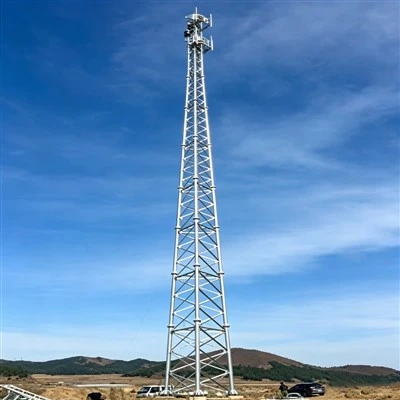
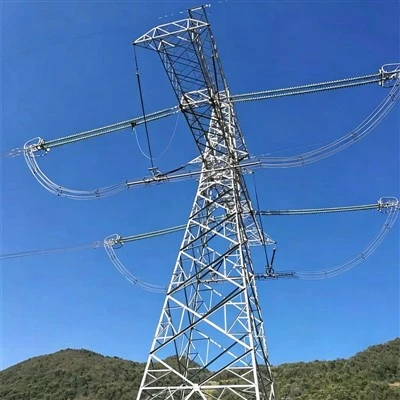
Truss towers are assembled from multiple triangular units; this structure effectively distributes loads and offers outstanding wind and seismic resistance.
Their cross-arms are typically arranged in a trapezoidal or rectangular pattern, and the tower body usually has a quadrilateral cross-section, resembling a three-dimensional grid made of slender members. This design is common in large-scale transmission projects exceeding 220kV, particularly for sections requiring spans across canyons or rivers.
II. Angle Steel Towers
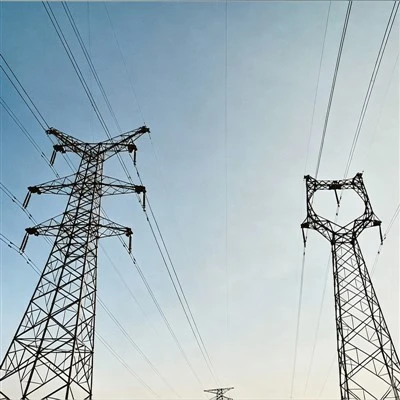
Angle steel towers utilize L-shaped steel members, connected by bolts to form a framework structure.
The tower body generally features a triangular or square cross-section, with cross-arms arranged in a straight horizontal line or a "T" shape. Due to the high standardization of components, on-site assembly is more efficient than that of truss towers; they are frequently used for small-to-medium-scale lines of 110kV and below, and are especially common in plains.
III. Round Steel Towers
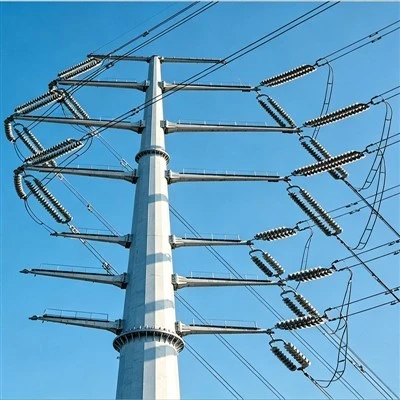
Both the uprights and cross-arms of round steel towers are made of steel pipe, resulting in a sleeker, more streamlined appearance compared to the other two types.
These towers offer greater flexibility in mountainous areas or special crossing scenarios, as their height and inclination can be adjusted to suit the terrain. However, because single-pipe members have relatively weak torsional resistance, they often require reinforcement with guy wires, which occupies more ground space.
IV. Selection Considerations
Beyond voltage levels, specific terrain conditions play a crucial role in selecting the right tower.
- Truss towers are suitable for long spans but involve complex foundation construction.
- Angle steel towers have lower transportation requirements but offer weaker resistance to lateral forces.
- Round steel towers adapt well to steep slopes but require a larger protection zone.
Budget and the ease of future maintenance must also be carefully weighed.
In actual projects, a combination of tower types is often employed; the key is to select the most cost-effective solution based on line parameters and site conditions.