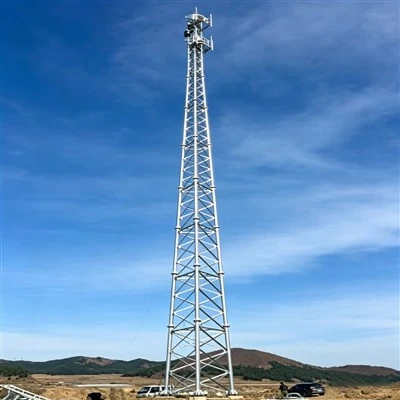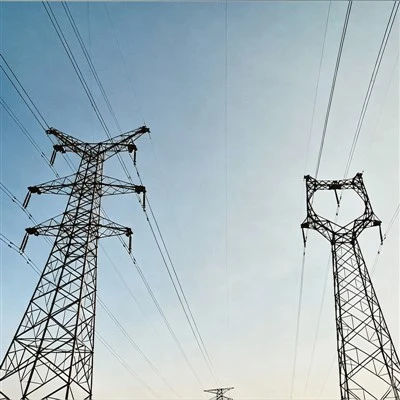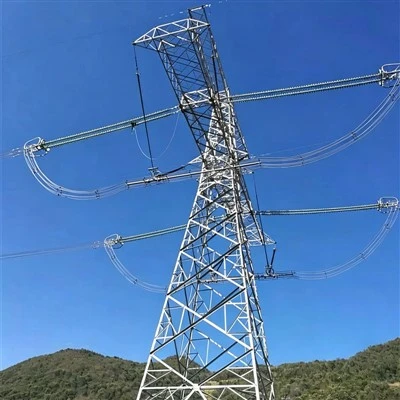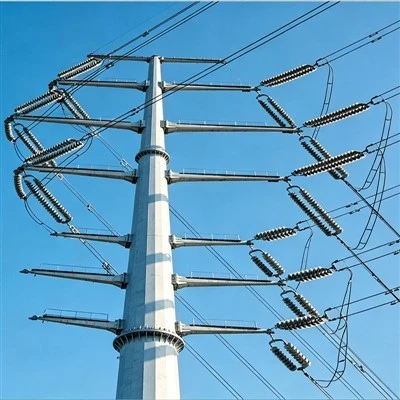

The construction process comprises three stages - foundation construction, tower installation, and equipment commissioning - with each step requiring strict adherence to operational standards. Foundation construction begins with a geological survey to determine the appropriate foundation type - such as independent, pile, or raft foundations - based on soil conditions. For instance, a project on soft soil utilized high-pressure jet grouting piles to increase the foundation's bearing capacity from 80 kPa to 150 kPa, thereby preventing the risk of tower tilting.
Tower installation requires specialized hoisting equipment; temporary guy wires must be used during sectional hoisting to ensure stability. When installing a 60-meter angle-steel tower, a construction team employed a "sectional hoisting plus laser positioning" technique to limit verticality deviation to within 0.1%, far exceeding the industry standard of 0.3%. During the equipment commissioning phase, antenna azimuth and tilt angles require precise calibration; one operator reduced the commissioning time per site from 4 hours to 1.5 hours - a 62.5% efficiency gain - by introducing an AI-assisted commissioning system.
Safety management is paramount throughout the construction process. A "three-level safety education" system must be established, and the certification status of personnel performing specialized tasks - such as high-altitude work or electrical operations - must be dynamically verified. During one project, the deployment of smart hard hats enabled real-time monitoring of personnel location and heart rate, successfully flagging three instances of non-compliant operation and reducing the safety accident rate to below 0.2%.
The design and construction of communication towers represent a deep integration of technology and management; every step - from precise calculations during the design phase to standardized execution during construction - demands a rigorous approach. As 5G networks become increasingly widespread, communication towers are evolving to be taller, lighter, and smarter, placing higher demands on the professional capabilities of industry practitioners. Whether they are design engineers, construction team leaders, or equipment suppliers, all stakeholders must continuously learn new technologies and standards to collectively drive the industry's high-quality development.