
Electromagnetic Wave Radiation and Reception: Feedlines deliver high-frequency alternating current to the antenna, where oscillating charges generate electromagnetic fields that propagate outward; during reception, the process is reversed, converting electromagnetic waves from free space into electrical signals.
Signal Modulation and Multiple Access: Baseband data is superimposed onto a carrier wave (via amplitude, frequency, or phase modulation) using techniques like QAM; multiple access schemes-such as Frequency Division, Time Division, or Code Division Multiple Access-are employed to distinguish between different channels at the same tower site.
Cellular Coverage and Backhaul: Towers are deployed in a hexagonal grid to form cellular sectors, with adjacent towers assigned distinct frequencies or time slots to prevent interference; signals travel from the tower to the base station and are backhauled via fiber optics to the core network switching center for routing.
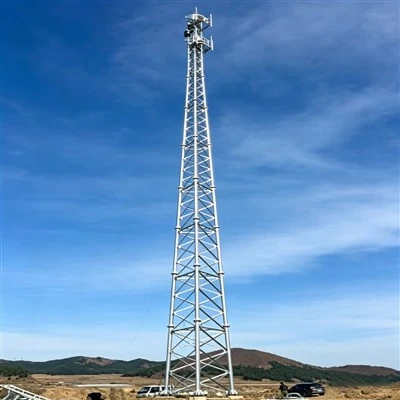
Height Gain and Line-of-Sight Propagation: Increasing the mounting height expands the unobstructed line-of-sight range within the Fresnel zone and reduces diffraction losses-a factor particularly critical for high-frequency bands such as microwave and millimeter-wave.